
The letter that stays in the drawer
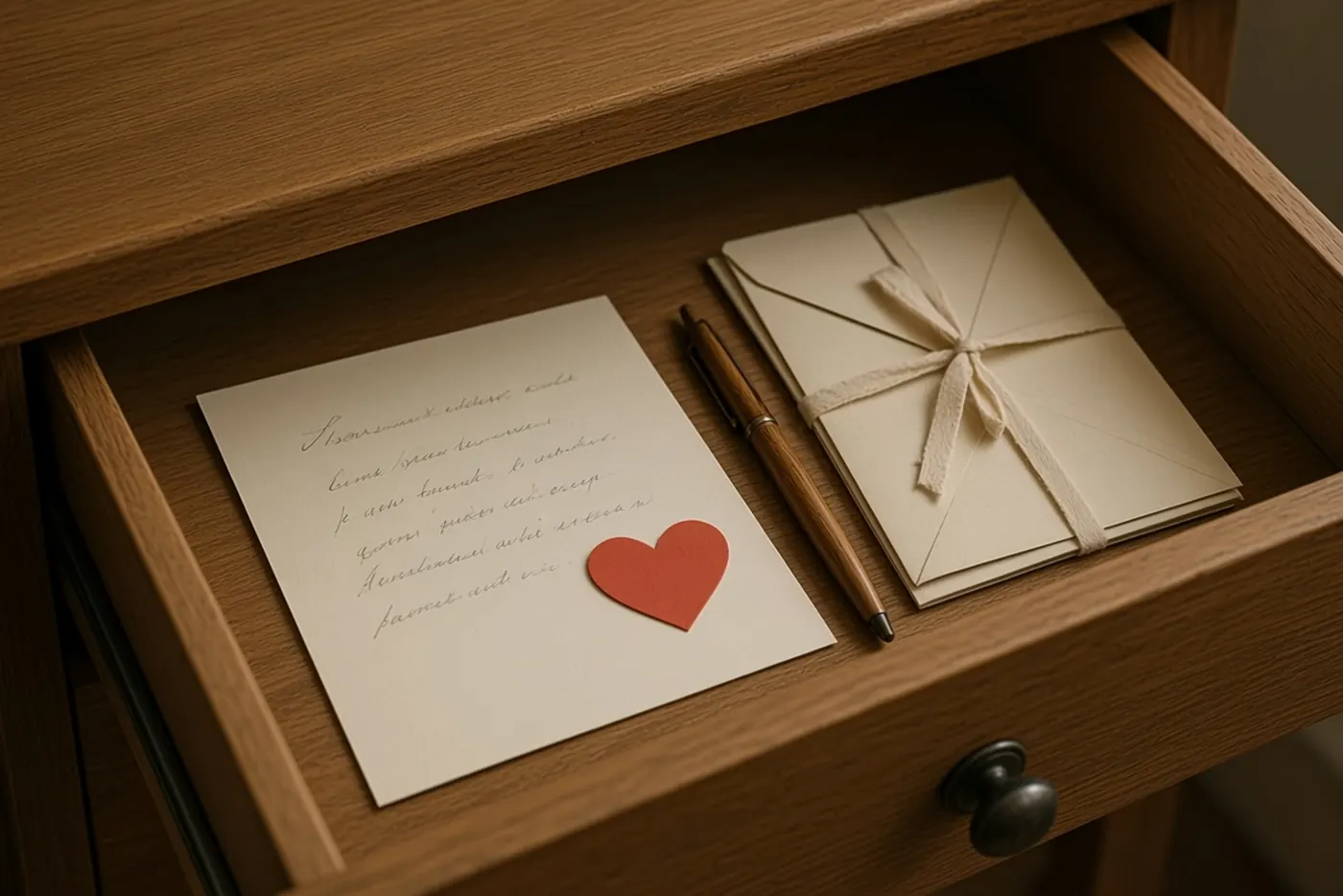
Most people have written a letter they never sent. Some were written to be sent later, and later never came. Others were never meant to go anywhere at all.
The practice is old. Marcus Aurelius kept notebooks he never published, writing to himself about how to live. Franz Kafka asked his friend Max Brod to burn all his unpublished manuscripts after his death; Brod refused and published them instead, which is why we have The Trial and The Castle. Emily Dickinson wrote nearly 1,800 poems and published fewer than a dozen while alive. The rest stayed in her desk drawer, sewn into small booklets. She seems to have expected them to be read eventually, but not by her contemporaries.
Some letters stay unsent for practical reasons. The person moved, and the address is no longer any good. The relationship ended badly, and sending it would make things worse. The letter was written in anger, and by morning the writer knew better. But a surprising number are written with no intention of sending at all. They are not drafts waiting to be rewritten. They are complete letters addressed to people who will never read them, and the writers seem to know this from the start.

The psychologist James Pennebaker has studied this kind of writing for decades. In his best-known studies, people who wrote about difficult experiences for just fifteen minutes a day over a few days showed measurable improvements in health and wellbeing. The people who benefited most were not those who simply vented, but those whose writing became more structured as they went, using more words like "realise" and "understand." They were making sense of what had happened, and the act of writing helped them do that. They did not need an audience. The writing itself was the point.
Grief counsellors often suggest the unsent letter. It lets someone say everything they need to say without managing the other person's reaction, which can be especially useful when the person is still alive but the relationship is complicated. A letter to a difficult parent can be written without worrying that it will hurt them or start an argument. A letter to an ex-partner can say all the things that should have been said during the relationship, without the risk of reopening old wounds. The letter gives the writer somewhere to put the words.
For letters to people who have died, the value is different. The letter will never be read, but writing it makes the loss real in a way that simply thinking about it does not. It names what the person meant, what was lost when they died, and what remains. For many people, the act of writing these things down is when grief stops being something that happens to them and becomes something they are working through. The letter does not need to reach anyone. It only needs to exist.
Sometimes the letter eventually gets sent. It sits in a drawer for months or years, and one day the writer decides it should go after all. More often it stays where it is. Either way, the letter has done what it needed to do. It gave the writer a place to put the words, and sometimes that is all the words need.