
The paper they kept

In 1790 a correspondent to the Gentleman’s Magazine saw a notice in a shop window in Knaresborough: “Funeral Biscuits sold here.” He wrote to explain what the notice meant.
At the funerals of “the middling and lower class of people,” each person attending was given sugared biscuits, “wrapt up, generally, two of them together, in a sheet of white paper, sealed with black wax.”
The custom was older than the shop window. John Ray’s collection of northern words, published in 1691, lists an arvill-supper as “a feast made at funerals,” and says the feast was still kept, in part, in the north. The same book lists arvel-bread. The notice in Knaresborough was for a smaller thing: two biscuits, and the paper round them.
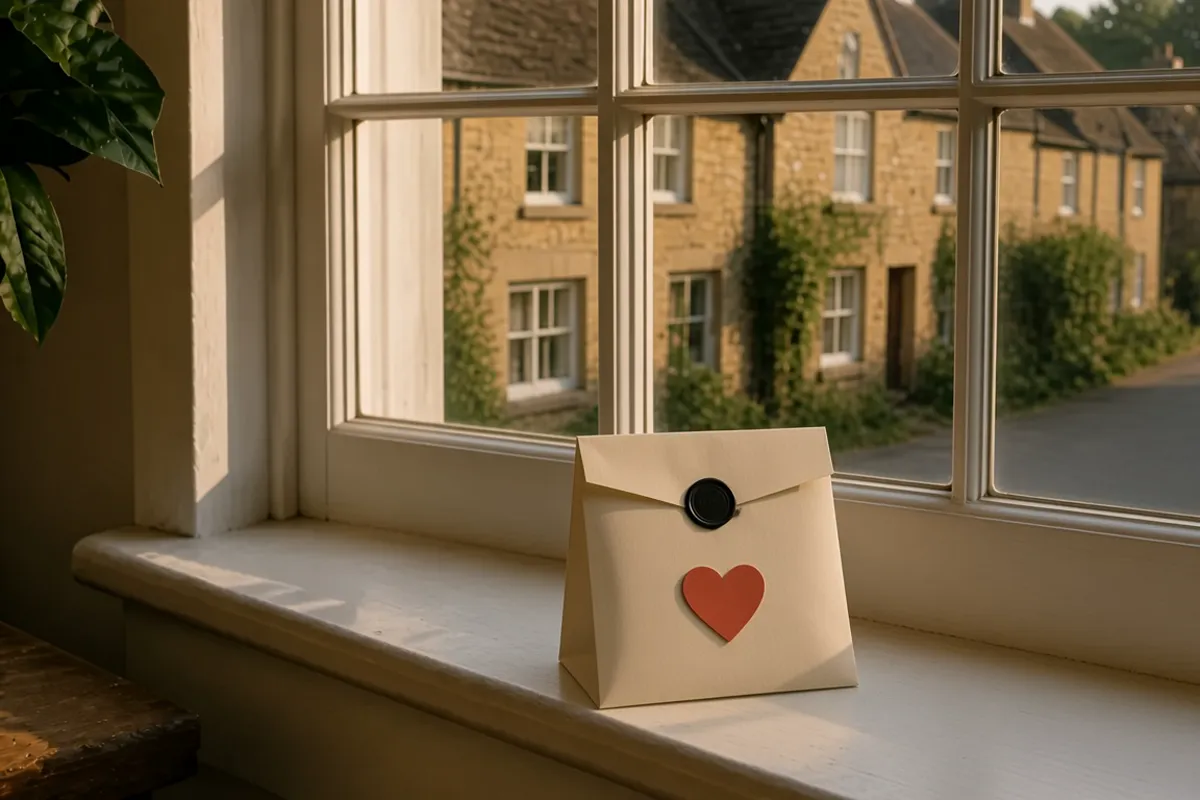
One of those sheets of paper is at the Pitt Rivers Museum in Oxford. It was given in 1919 by Thomas Barnett, a jeweller in Birmingham. The wrapper reads “Biscuits for the funeral of Mrs Oliver, died November 7th 1828. Aged 52.” The museum’s note places the funeral in the Cleveland district of Yorkshire. Under the name are verses from a hymn by Isaac Watts, beginning “Thee we adore, eternal Name,” and reaching “What dying worms we be.” Where Watts wrote “wasting,” the wrapper prints “waisting.” The last line on it is “Prepared by T. Robinson, Surgeon, Settle.” Nothing else is known about Mrs Oliver, or about T. Robinson. In 1917 the folklorist E. Sidney Hartland called the wrapper “one of the very few material relics” of the custom of handing each mourner a packet of cake or biscuit.
In 1916 a correspondent to Notes and Queries remembered a printer he used to visit. The printer supplied confectioners with verses, and the confectioners offered the verses to a family when the biscuits were ordered. The family chose the lines. The name, the date and the age were set for that funeral.
A Lancashire woman, Mrs Shuttleworth, told the historian Elizabeth Roberts about the biscuit. “When you went to the funeral you always got a funeral biscuit wrapped in paper. It was like a sponge.” A little girl had died. “Our Tom said, ‘Will we be going to the tea party and getting a biscuit?’ He was only thinking about the biscuit.” The biscuit was eaten. The paper was the part that could be put away.
A wrapper has room for a name, an age and a few lines of a hymn. The name was the part printed for that day. Mrs Oliver’s biscuits are gone. The paper is still in the museum, and it still has her name.