
The shells they brought home
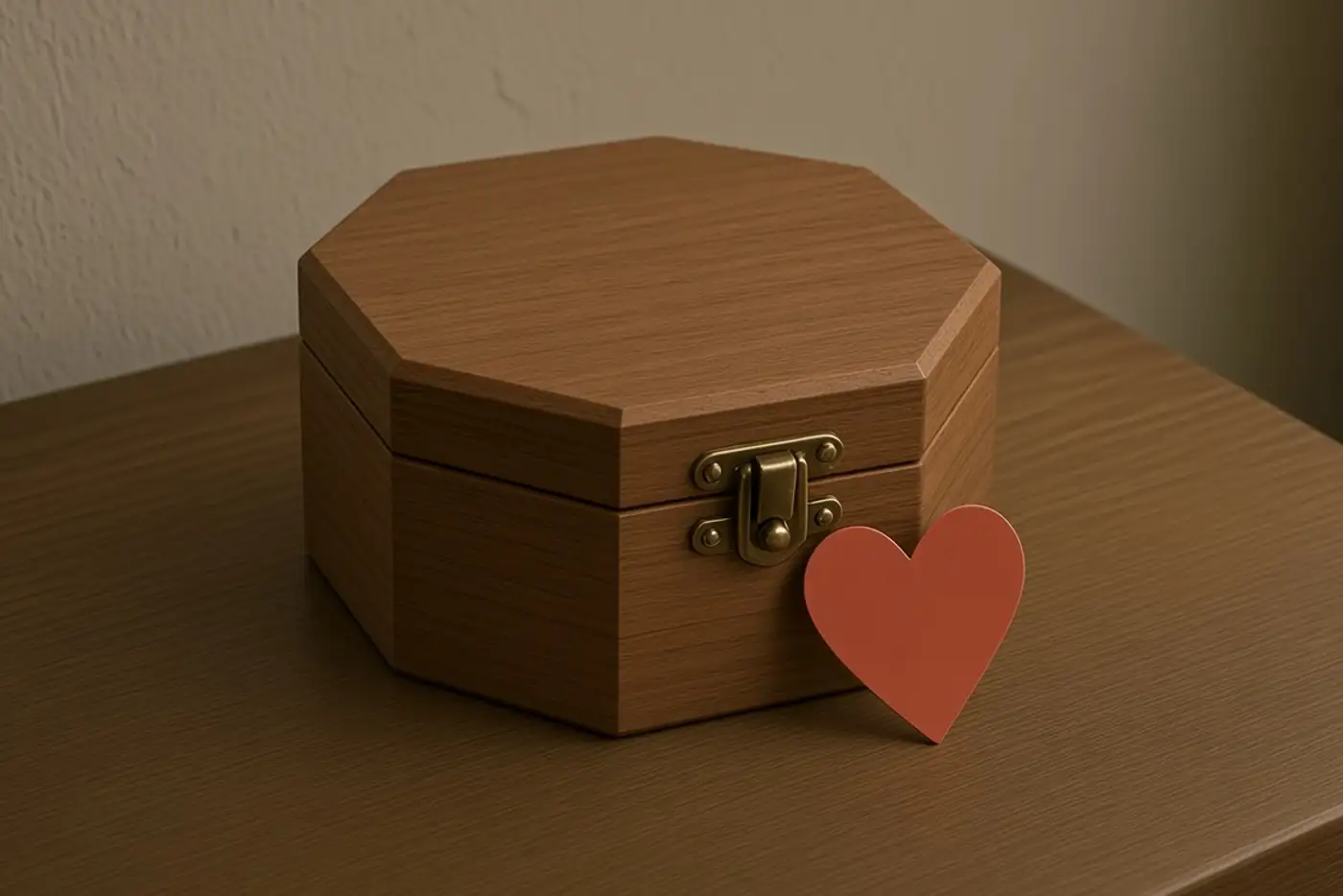
While he was captain of the coasting schooner Edward Johnson, David Chapin Warren bought a double box of shells in Bridgetown. The shells spelled “Souvenir from Barbados.”
A box of that kind was called a sailor’s valentine, and for a long time it was taken for shipboard work. In the 1960s Judith Hughes, a specialist in the decorative arts, listed what a box required: wood, glass, glue, cotton, newspaper, cardboard, paint, varnish and screws, and a design that repeats from box to box. A heart, a rosette or a small bouquet sits in the middle. Rings of shells run out to an octagonal case of cedar or mahogany, with glass over them. The line in the middle was one of a few sold ready-made. “To My Sweetheart.” “For My Mother.” “Truly Thine.” “Forget Me Not.”
The boxes were made in Barbados, and sold from the 1830s into the early twentieth century. Men built the wooden cases. Women set the shells. More than thirty kinds of Caribbean shell have been identified in the boxes that survive. They were stuck down with hide glue, onto newspaper or cotton, in rows that turn from one compartment to the next. A double box was hinged in brass and shut with a hook, so the two panes of glass faced each other and the wood was on the outside. It fitted in a portmanteau. Under the shells of one box, from the Kendall Whaling Museum, a conservator found a scrap of the Barbadian used as padding. The scrap is headed “Public Meeting”, and it records an assembly of the “Free Coloured and Free Black Inhabitants” of the island, chaired by Samuel Jackman Prescod on 6 May 1833.
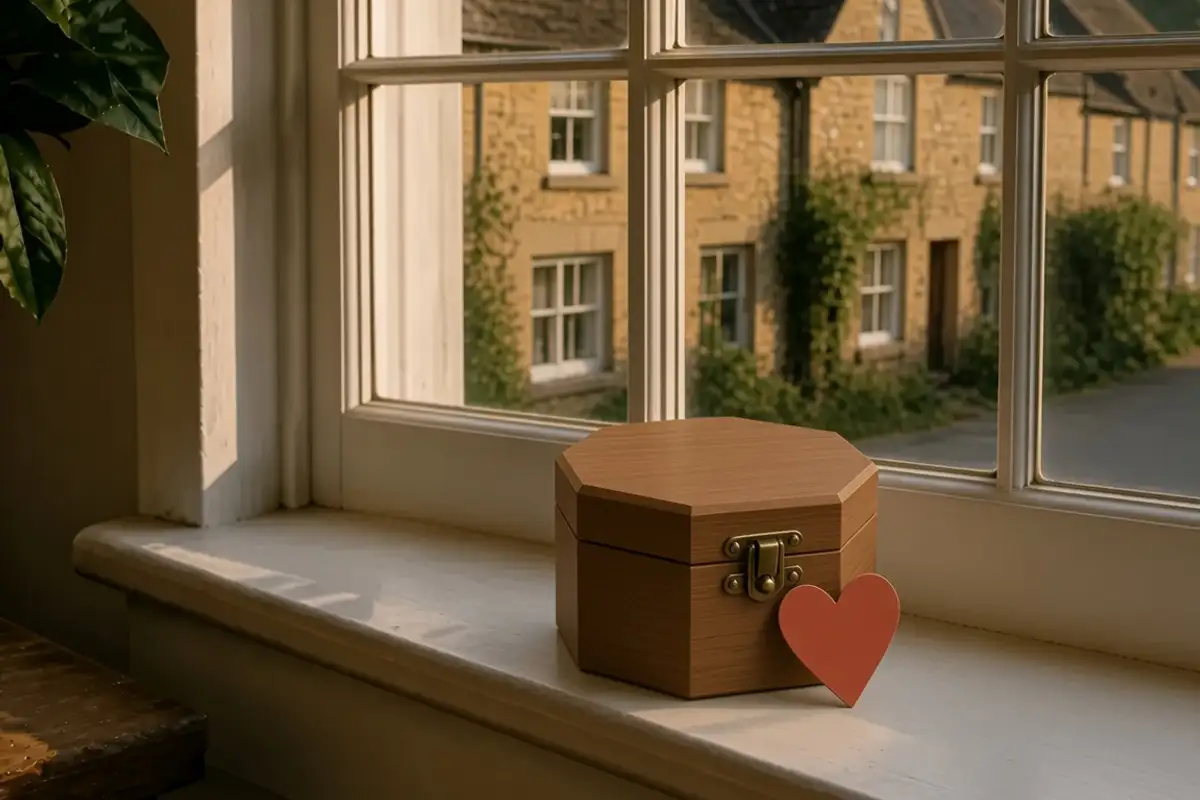
The Strong National Museum of Play, in Rochester, New York, holds one of the largest collections. One box, numbered 74.648, is dated about 1850. It measures 34.2 centimetres each way and 3.8 centimetres deep, and the case is Spanish cedar. A padded heart in the middle is bordered with red jequirity seeds, and a ring of small spiral shells spells “A Gift from a Friend”. A second, numbered 74.689, is a hinged pair from the late nineteenth century, 23.1 by 46 centimetres. One side reads “A Present from Barbados”.
Many of the later boxes passed through one shop. From 1878 to 1925 Benjamin Hinds Belgrave and his brother George Gordon Belgrave kept Belgrave’s Curiosity Shop in Bridgetown. Their label reads “Dealer in Marine Specimens and Native Manufactures in Fancywork”. A valentine at the New Bedford Whaling Museum, numbered 00.223.4, still has one of those labels. In 1893 James Stark, in a guide to the island, wrote: “At no other port in the Caribbean Islands is to be seen so great a fleet of merchantmen and coasting vessels.” For many of those ships, Bridgetown was the last call before home.
Warren was trading for J. S. Emery & Company between 1884 and 1894. He took lumber and manufactured goods out, and brought back sugar, pitch, rum, mahogany and palm oil. His wife, Jeannette, often sailed with him. The box he bought was fitted with a brass chain, and at their summer house in Islesboro, Maine, it was put where people could see it. The line on it does not give her name. It gives the place.
An octagonal box has room for one sentence, spelled in shells. Forget me not. A gift from a friend. A present from Barbados. Warren’s says where it was bought. The shells have kept it.